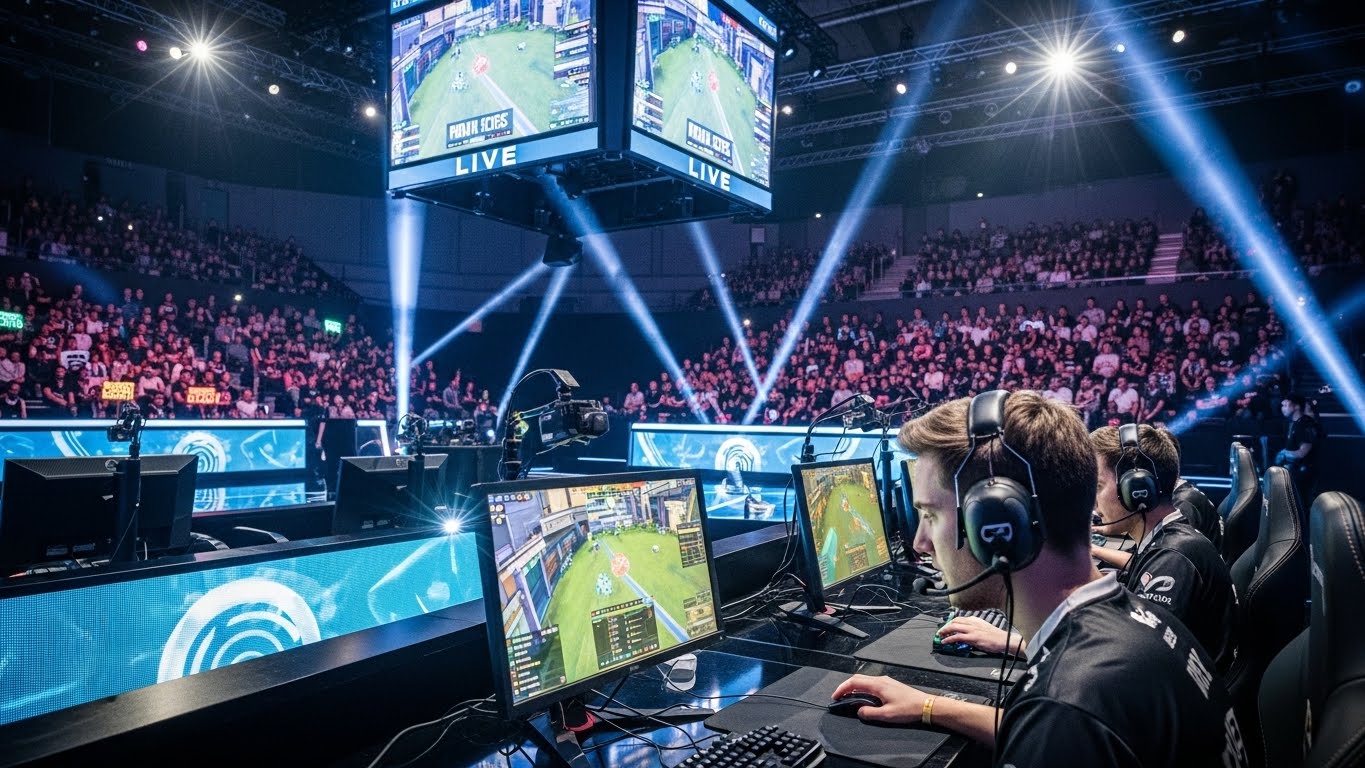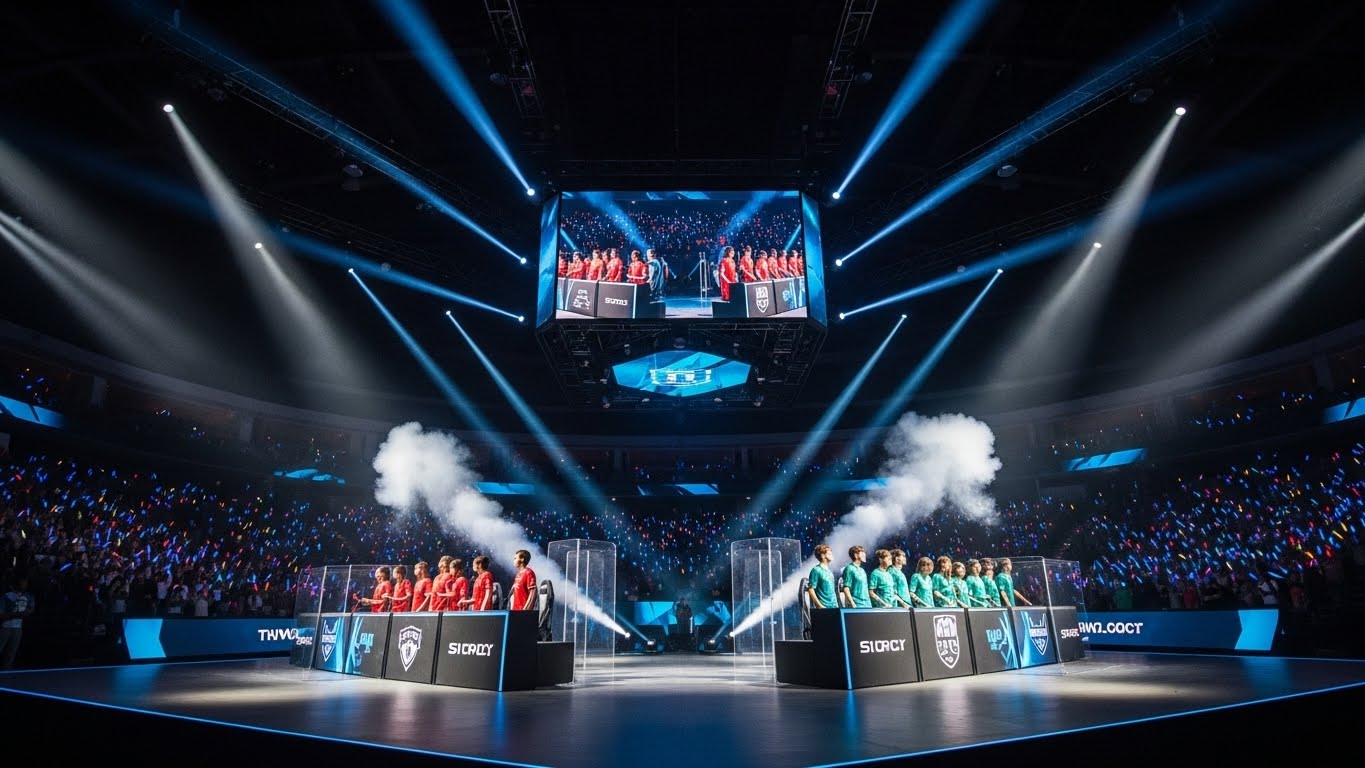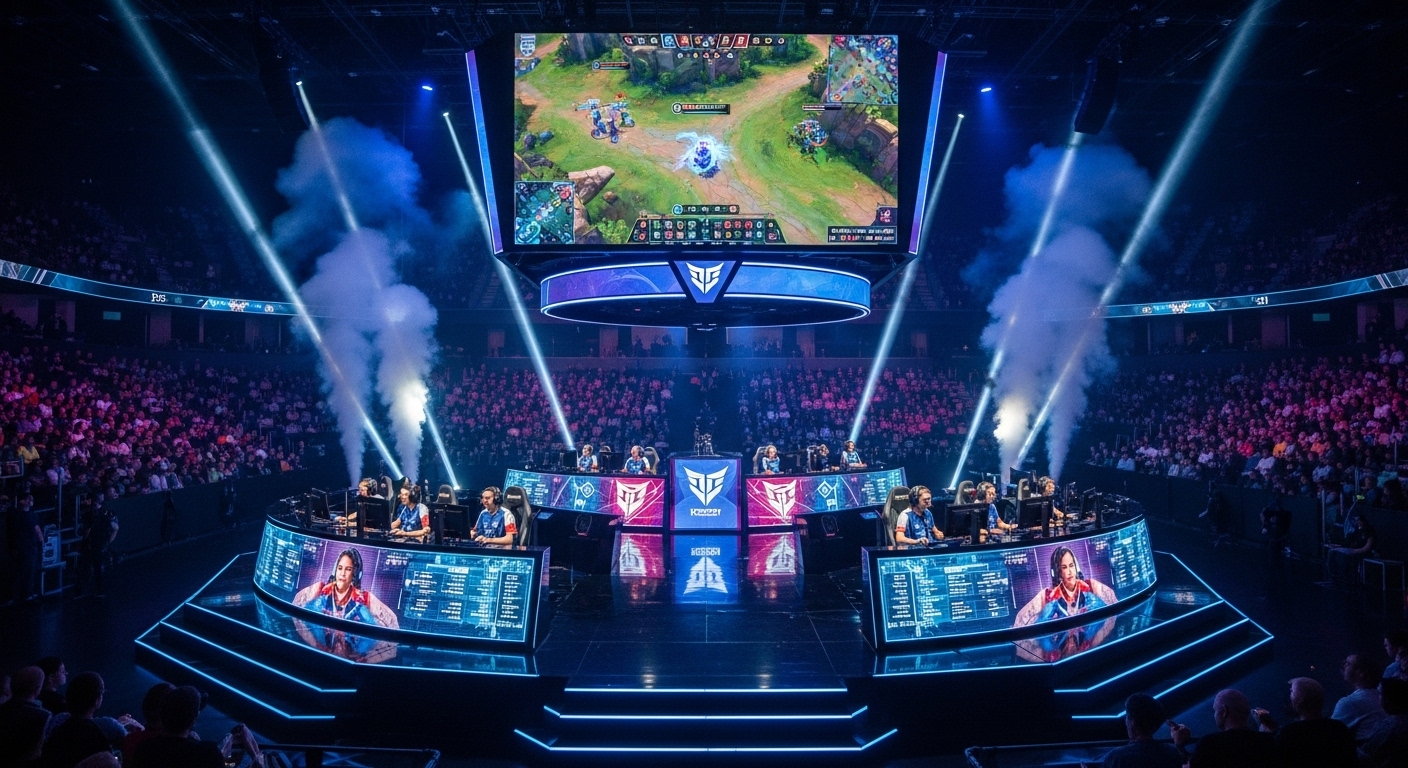
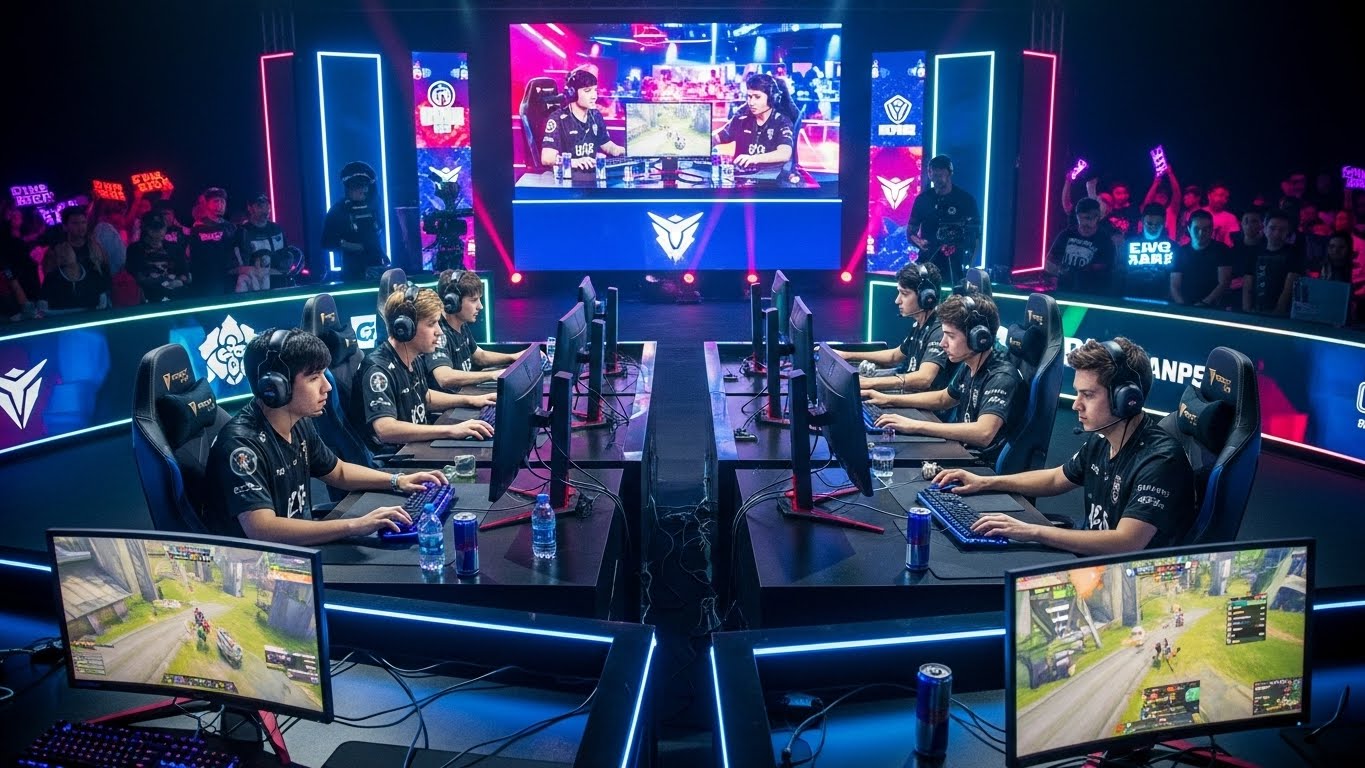
In recent years, esports has grown from a niche hobby to a multi-billion-dollar industry with a massive global following. What was once seen as a pastime for gamers has now become a professional competitive arena where skill, strategy, and teamwork collide in front of millions of viewers. With professional tournaments, sponsorships, and even college scholarships available for top players, esports has firmly established itself as a significant cultural and economic force. In this blog post, we will dive into the evolution of esports, explore its rise to mainstream popularity, and look at what the future holds for competitive gaming.
The Birth of Esports: A Community-Driven Beginnings
Esports as we know it today can be traced back to the late 1990s and early 2000s. While competitive gaming existed before this period, the infrastructure and audience necessary for professional esports were not in place. Early examples of competitive gaming, such as tournaments for Street Fighter and Quake, were local events held in arcades or small venues. These events were informal, often organized by passionate gamers and communities, with little fanfare beyond those who participated. It was only when internet speeds improved and online gaming platforms like Battle.net (created by Blizzard Entertainment) and Xfire emerged that the esports scene began to shift into something more organized.
The launch of games such as StarCraft, Warcraft III, and Counter-Strike was pivotal in shaping the competitive gaming landscape. These titles introduced the concept of ranked play, allowing players to compete against others in structured, organized formats. Tournaments began to emerge, and in some cases, gamers could win prizes or recognition, creating a foundation for the competitive structure that would follow.
However, it wasn’t until the early 2010s that esports really took off. Global internet infrastructure improved, enabling players from different countries to compete with each other online. At the same time, streaming platforms like Twitch launched, giving gamers a platform to broadcast their gameplay and build audiences. This change was a game-changer for esports, as it allowed players to showcase their skills to a global audience and for fans to watch their favorite competitors play in real-time.
The Rise of Professional Esports Leagues
As the esports scene grew, so too did the need for structure and organization. Tournaments such as The International (for Dota 2) and League of Legends World Championship brought professional-level competition to the forefront. The success of these events demonstrated the huge potential for esports to become a mainstream sport. As a result, organizations began to form professional leagues, much like those in traditional sports.
The League of Legends Championship Series (LCS), for example, debuted in 2013 as one of the first major professional leagues dedicated to esports. This league brought together top players from North America and Europe, each competing in a regular season and playoffs. The success of the LCS and similar leagues inspired other games, such as Overwatch, CS:GO, and Call of Duty, to create their own professional leagues. These leagues provided gamers with a clear career path and a way to earn a living by competing at the highest level.
The development of these leagues not only increased the legitimacy of esports but also led to significant financial investments. Major companies, including non-endemic brands like Coca-Cola, Intel, and Mercedes-Benz, began to sponsor events and teams, fueling the growth of the industry. Esports organizations became more sophisticated, offering contracts to players, creating team brands, and hiring coaches and analysts to improve performance.
Esports as a Cultural Phenomenon
Esports is no longer just a hobby—it has become a cultural phenomenon. With millions of fans watching live events online, esports has taken its place among other mainstream sports in terms of global reach. According to recent statistics, esports viewership has surpassed traditional sports such as Major League Baseball and the NBA Finals in terms of live streaming. The 2020 League of Legends World Championship, for instance, attracted a peak viewership of over 3.8 million viewers simultaneously, an impressive feat considering the competition it faces from traditional sports.
The rise of esports has also given birth to a new type of celebrity. Gamers who have dominated tournaments and earned millions in prize money have become international stars. Players like Faker (Lee Sang-hyeok), Ninja (Tyler Blevins), and s1mple (Oleksandr Kostyliev) are household names, with dedicated fan bases, sponsorship deals, and personal brands. These players are not just known for their skills—they are influencers in the gaming community, with large social media followings and opportunities to collaborate with brands outside the gaming space.
Esports has also fostered a unique community. The competitive gaming scene thrives on collaboration, camaraderie, and fan engagement. Fans can watch live broadcasts of tournaments, engage with players through social media, and even participate in online fan clubs and forums. Esports has cultivated a sense of belonging for people around the world, and for many, being a part of the esports ecosystem is just as important as the competition itself.
The Role of Streaming Platforms and Content Creators
The emergence of streaming platforms like Twitch, YouTube Gaming, and Facebook Gaming has played a pivotal role in the growth of esports. These platforms not only allow players to broadcast their games live but also create content around the competitive gaming scene. Through live streaming, esports personalities and players can engage directly with their audience, answering questions, interacting with fans, and even providing tips for aspiring players.
Streaming has become a career path in its own right, with content creators earning money through sponsorships, donations, and ad revenue. Many professional gamers, such as Shroud and Pokimane, have built massive followings on platforms like Twitch, turning their gaming passion into lucrative ventures. Streamers can diversify their content by interacting with their community, playing casual games, or even hosting charity events. This shift has blurred the lines between traditional athletes and influencers, creating a new breed of entertainer who combines gaming prowess with personality.
Furthermore, streaming platforms have enabled fans to consume esports content in a way that suits their preferences. Whether it’s watching a League of Legends match live, catching up on highlights from a Dota 2 tournament, or watching a popular streamer play a variety of games, the choice is endless. The accessibility and convenience of these platforms have contributed to the growing viewership of esports events.
The Financial Impact and Sponsorships
Esports has evolved into a major economic force. In 2020, the global esports industry was valued at over $1 billion, with projections showing it could surpass $2 billion by 2024. A large chunk of this revenue comes from sponsorships, broadcasting rights, merchandise sales, and advertising.
Sponsorship deals are one of the driving forces behind the growth of esports. Non-endemic brands, such as Mercedes-Benz, PepsiCo, Nike, and Intel, have recognized the massive audience and engagement of esports fans, leading them to invest heavily in the space. These sponsorships not only fund tournaments but also support individual players and teams, helping them with travel expenses, equipment, and even salaries. This influx of sponsorships has raised the profile of esports, bringing in mainstream attention and solidifying its place in the global entertainment industry.
Media rights are another major revenue stream for esports. Companies like Twitch, YouTube, and ESL have bought exclusive broadcasting rights for major esports events, giving them control over the distribution of content. These partnerships have led to a more professional and polished viewing experience, attracting viewers who may not have considered esports in the past.
The Future of Esports: Opportunities and Challenges
As esports continues to grow, it faces both opportunities and challenges. The potential for global expansion is immense, especially in regions like Southeast Asia, Latin America, and the Middle East, where esports is starting to gain traction. As infrastructure improves and internet connectivity becomes more widespread, esports could become a mainstream activity in these areas.
However, the rapid rise of esports brings its own set of challenges. Issues such as player burnout, mental health concerns, and the sustainability of the business model are important topics that need to be addressed. Additionally, as the esports ecosystem expands, maintaining its integrity and avoiding exploitation of players will be critical. Ensuring that players are treated fairly, compensated adequately, and given the necessary support to balance competition with personal well-being is key to the long-term health of the industry.
Conclusion: A New Era of Competitive Gaming
Esports has come a long way from its humble beginnings. What started as a casual activity for a select group of gamers has transformed into a multi-billion-dollar industry with global appeal. With professional leagues, huge sponsorship deals, and a dedicated fan base, esports is now a legitimate force in the entertainment world.
As the industry continues to evolve, esports will continue to push boundaries and redefine what it means to be a professional athlete. With new games, new technologies, and new opportunities for fans and players alike, the future of esports is bright. Whether you’re a competitive player or a casual viewer, one thing is clear: esports is here to stay.